

In March, the D.C. Policy Center’s Education Policy Initiative hosted the State of D.C. Schools, 2024-25 report release event. The event featured expert speakers who discussed successes in D.C.’s public education as well as challenges looking forward.
Other publications in this series:
State of D.C. Schools, 2024-25: Forward momentum
State of D.C. Schools, 2024-25: Report Preview
Chart of the week: D.C. student assessment results show growth varies by student group
School year 2024-25 marked a meaningful step forward in D.C.’s public schools with enrollment increasing for the third year in a row, higher teacher retention, rising graduation rates, and improved learning outcomes. On the other hand, some difficulties persisted, including elevated chronic absenteeism rates and mixed indicators for college and career readiness. In addition, emerging federal shifts brought new challenges, including increased immigration enforcement, federal funding uncertainties, and higher unemployment levels.
The D.C. Policy Center’s State of D.C. Schools, 2024-25 reportplaces these developments alongside community perspectives and national and regional benchmarks to assess where the system is making durable gains and where focused, coordinated action is still needed.
The release of this year’s report included a discussion of the report’s findings and reflections from different education stakeholders: Paul Kihn, DC Deputy Mayor for Education; Dr. Antoinette Mitchell, Superintendent of the DC Office of the State Superintendent of Education (OSSE); Dr. Drewana Bey, Deputy Chancellor for Social Emotional and Academic Development, DC Public Schools (DCPS); Denise Forte, President and Chief Executive Officer of EdTrust; Shannon Hodge, Chief Executive Officer of KIPP DC Public Schools; LaSheema Burnett, Ward 8 Parent Leader at PAVE (Parents Amplifying Voices in Education); and Meklit Habteab, a D.C. high school senior.
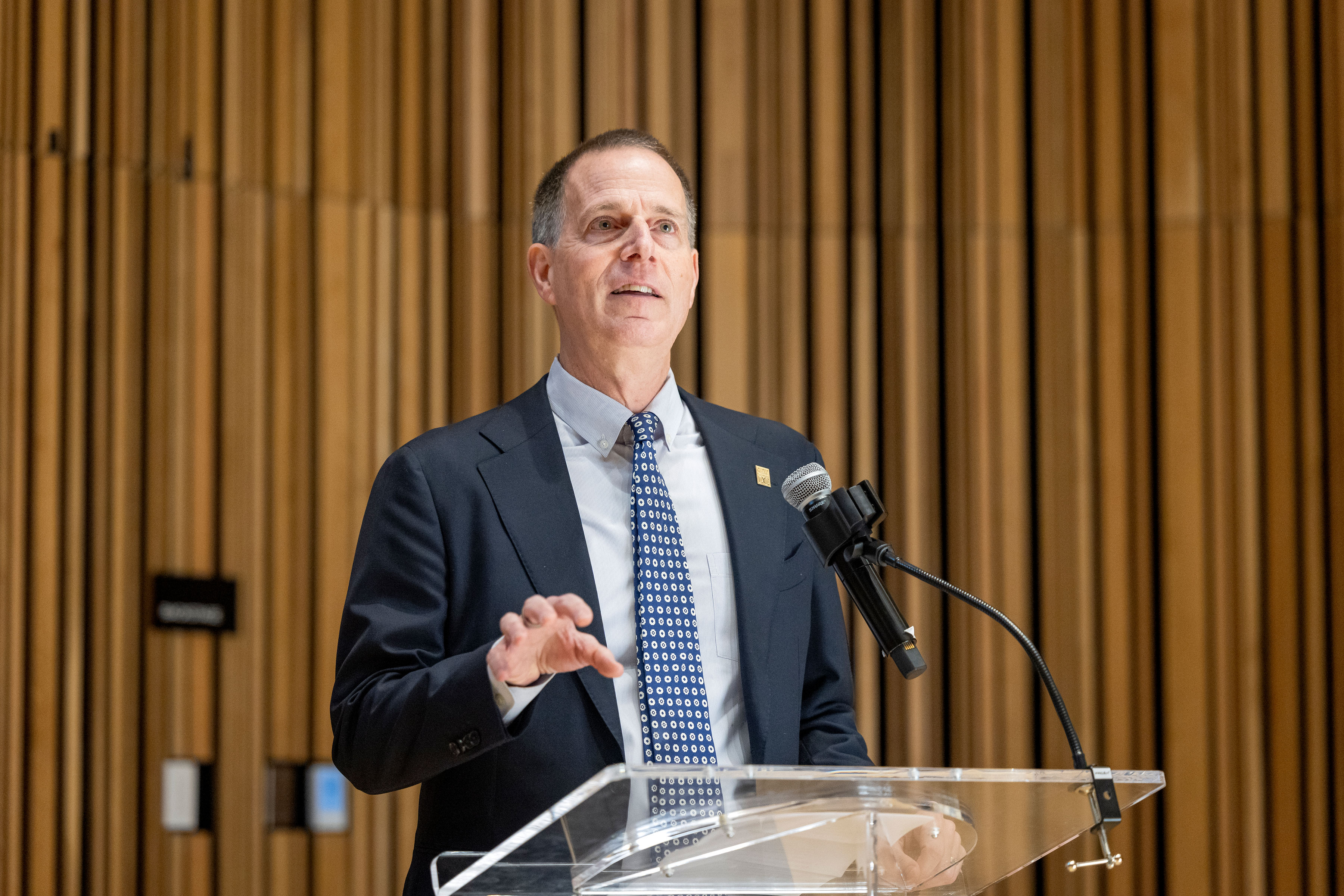
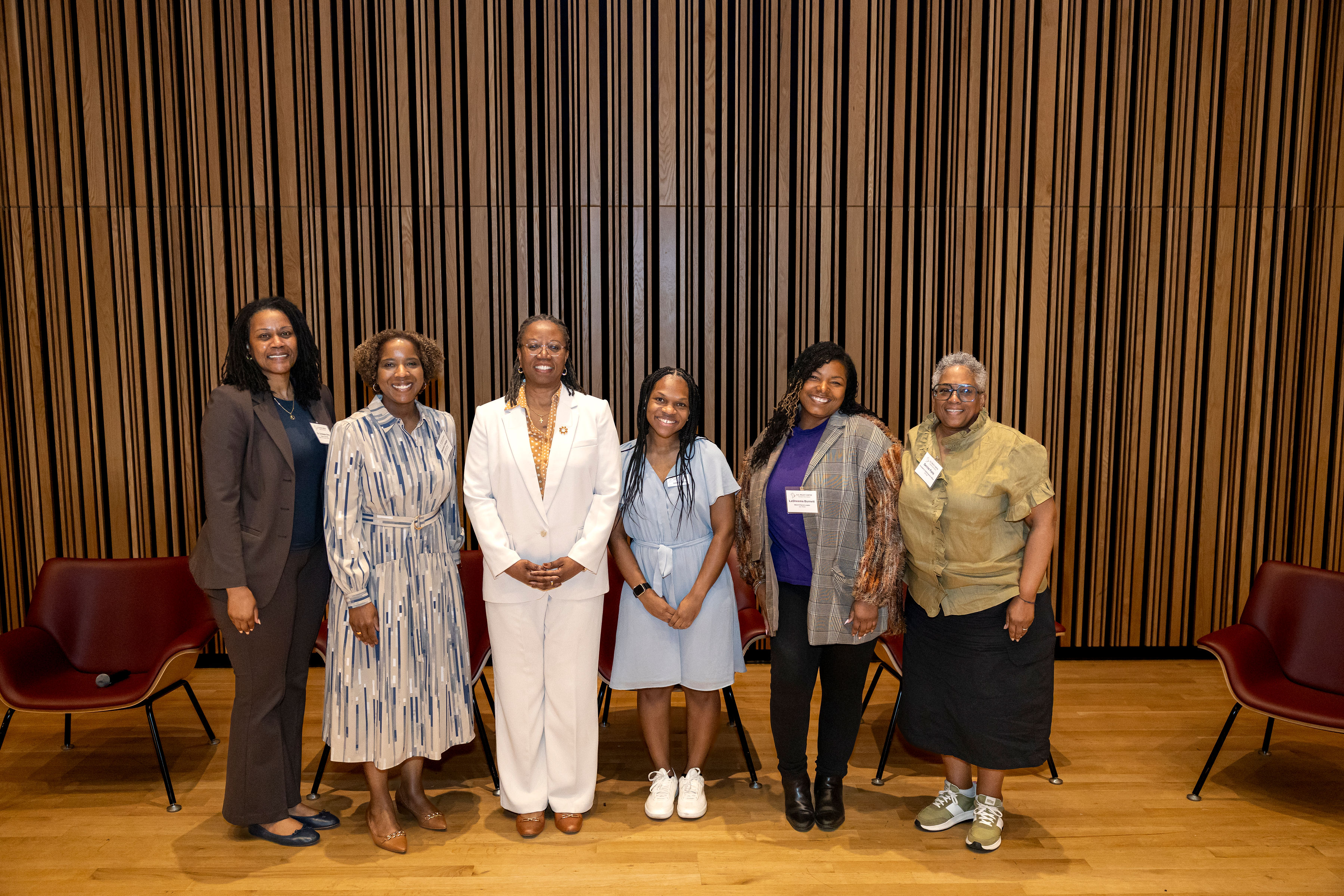
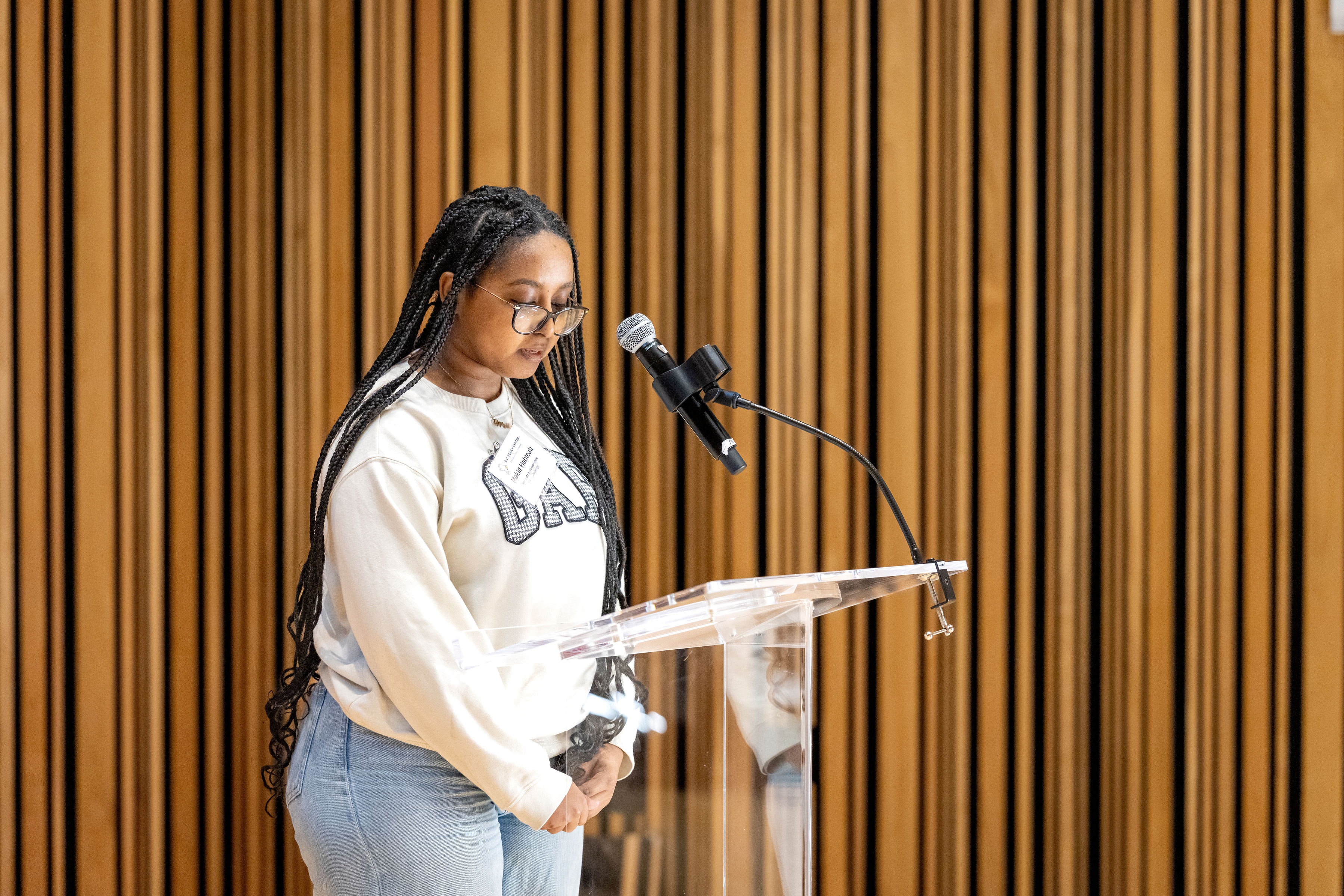
Here is a summary of the conversation from the State of D.C. Schools, 2024-25 release event from most of the day’s invited speakers.
Deputy Mayor for Education (DME) Paul Kihn
DME Kihn provided opening remarks to frame the report findings and panel discussion.
Remarking, “The state of schools in Washington, D.C. is strong and getting stronger every single year,” DME Kihn highlighted areas of success for D.C.’s public and public charter schools. Teacher retention is up, with 78 percent of teachers across the city remaining in the same school year-over-year, compared to 70 percent at high-need schools nationwide. Academic achievement is unsurpassed in the country in terms of growth. In school year 2025-26, D.C. schools saw 3.6 percent growth in both ELA and math on DC CAPE assessments. The graduation rate has increased to 78.7 percent. In 2011, it was just over half.
DME Kihn celebrated the incredible work of teachers, leaders, and entrepreneurs who drove this success, as well as remarkable leadership over the last 30 years in the city, in the Mayor’s office, in the Council, and in individual schools. He also noted the important education investments that have contributed to successes in D.C. schools. Funding for education has doubled over the past decade—it follows students, translates into the highest starting salaries for teachers in the country, and makes possible investments in structured literacy, high-impact tutoring, and other resources at the systems level. Another set of sources of improvement revolves around 30 years of the public charter sector, DCPS’ turnaround, and Mayoral control—with cross-sector collaboration to make it work.
Nonetheless, DME Kihn acknowledged challenges that lie ahead. Enrollment is a headwind, and it declined slightly in the 2025-26 school year. Chronic absenteeism is stuck at 39 percent. There are stubborn equity gaps. In the bigger picture, there are very strong economic headwinds and uncertainty about how to prepare students for a future with AI.
“We’ve got so much left to do, but in the midst of this work, we cannot forget that together we have built something incredibly special. Something that no other place in the country has. And it’s really, really important that we sustain it.”
Find the full transcript from the Inside DC Education blog.
Dr. Drewana Bey, Deputy Chancellor for Social Emotional and Academic Development, DC Public Schools (DCPS)
Dr. Bey shared strategies and insights on educator retention and trends for high school students at DCPS.
D.C.’s educator retention improved in School Year 2024-25 for the third year in a row and for the first time for principals since the pandemic—95 percent of principals returned to DCPS, and 93 percent returned to lead the same school. DCPS’ retention success has extended to its educators. Robust professional development opportunities, data‑driven approaches, and the incorporation of educator feedback have resulted in the District retaining 95 percent of its effective and highly effective teachers, with 99 percent of its vacancies filled at the start of school year 2025-26.
Other national trends influence local trends and indicate that outcomes for high school students have been more uneven than in earlier grades. To move the needle, DCPS has made certain that the social-emotional well-being of scholars is integrated into the academic experience, especially for its secondary students. DCPS’ high school students report one of the highest senses of belonging in the country—ranking in the 90th percentile. Initiatives like high school redesign coupled with staple programming like the District’s robust dual enrollment opportunities and career and technical education are ensuring students feel connected to their school and are prepared for success beyond graduation.
Denise Forte, President and Chief Executive Officer, EdTrust
Denise Forte discussed implications of federal shifts for D.C. and effective advocacy strategies.
The federal government has long played a critical role in public education by establishing a baseline of support for historically underserved students, including migrant students, English learners, and students of color. For D.C. students, the federal role in public education is particularly consequential. Unlike states and most localities, D.C. remains subject to federal decision‑making that can directly shape education funding and policy, often without full local control. This unique governance structure amplifies the impact of federal actions on D.C.’s schools and students, and it underscores the need for reforms that allow D.C to have greater authority to meet the needs of its students.
Schools have seen this amplification with recent federal shifts—particularly in immigration enforcement—that have introduced new uncertainty for students, families, and educators. Research and District data should troubling trends that include a rise in chronic absenteeism and a decline in academic outcomes. In D.C., Ben Williams, a member of the State Board of Education, described the “immense fear and terror that is threatening student safety getting to and from school every day.” When students disengage from school, the consequences extend beyond missed instructional time. Disruptions to attendance undermine students’ relationships with teachers and peers, erode trust in institutions, and weaken the sense of safety and belonging that is essential for learning and long-term success.
Advocating for migrant students and other students from historically underserved communities both in D.C. and around the country requires credible and actionable data. This is why publications, like The State of D.C. Schools 2024–25 that provide a clear, evidence-based picture of where schools are making progress and where challenges persist, are essential. As conversations about education equity increasingly occur on a national stage, D.C.’s experience offers an important case study—highlighting meaningful gains while making clear that sustained commitment and policy alignment are necessary to ensure all students can thrive.
Shannon Hodge, Chief Executive Officer, KIPP DC Public Schools
Shannon Hodge discussed academic improvements in KIPP DC PCS, particularly for high school students, and strategies for addressing chronic absenteeism.
In school year 2024-25, there were significant academic gains across KIPP DC PCS’ high schools, including a 9-percentage point increase in English Language Arts (ELA) proficiency for high school students, an 86 percent graduation rate, and a 100 percent college acceptance rate. These improvements were not driven by a single strategy, but rather by a set of coordinated efforts focused on leadership, instruction, and student experience. High school principals receive daily coaching from experienced leaders, and structural changes have reduced non-instructional responsibilities, so principals can focus more directly on teaching and learning. KIPP DC PCS has also rethought the high school model by modernizing schedules to allow time for internships and other external learning opportunities, recognizing that high school students require different structures and supports than younger students.
Additionally, KIPP DC PCS has invested in strengthening the overall learning environment and expanding pathways to college and careers. Schools have prioritized student belonging, safety, and voice, with some campuses adding dozens of student-led clubs based on student interests. Investments in strong core classroom instruction have been paired with career and technical education opportunities, including NAF academies available at every high school where 10th graders can apply for intensive career training, coursework, and internship partnerships. To address attendance, the District takes an age-responsive approach: younger students’ attendance strategies focus on family engagement, while strategies for older students have included implementing restorative justice practices, expanding counseling and mental health support staff, and integrating student-voice initiatives so that young adults have an active role in shaping their school culture to encourage purpose and connection. Multidisciplinary teams meet regularly to develop individualized attendance plans, staff make personal daily calls to families, and regional offices share daily attendance data with schools to help them monitor progress and learn from peers.
LaSheema Burnett, Ward 8 Parent Leader, PAVE (Parents Amplifying Voices in Education)
LaSheema Burnett provided her perspective as a parent, sharing her thoughts on the new challenges for families that arose last school year and policy priorities for parents.
Drawing on her experiences as both a parent and a social worker, LaSheema discussed how what affects students outside of school will impact them in school, and how students’ basic needs must be met before focusing on higher level needs. Especially amid barriers like increased federal immigration enforcement, schools must work in partnership with each other, with families, and with the community to ensure students feel safe both in and out of school. LaSheema underscored the importance of providing students with a safe, stable, and supportive environment, combined with evidence-based academic supports, so that they are equipped to engage in deeper learning.
LaSheema also shared about the need to bridge the gap between schools, so that students’ access to resources is not determined by the ward they live in or the school they attend. As a parent, she has seen firsthand the difference supports like high-impact tutoring (HIT) make: her daughter, who has an IEP, has greatly improved her test scores and confidence through her participation in a HIT program offered by her school, but she worries about the students who do not have access to these programs, and what would happen if her daughter were to lose access to tutoring due to increased fees or changing schools. Initiatives like high impact tutoring, transportation investments, and school and community safety are all integral to student and school advancement, and all schools should be able to provide the resources and supports students need to thrive.
Meklit Habteab, Student Representative
Meklit shared her experiences as a high school senior in a D.C. public school. She highlighted her teachers, who are invested in her success and who encourage her to think about college and career options after high school. She added that school has prepared her to be successful in the future, challenging her to think critically, manage heavy workloads, and develop academically.
Though, like other speakers, Meklit noted the challenges that persist, namely chronic absenteeism, uneven college and career readiness, and economic uncertainty.
“These barriers represent reality for many of us. For example, oftentimes there are long lines of students outside of school because of metro delays, traffic, or extreme weather. Students want to be on time and present, but transportation and family responsibilities are big barriers that make it difficult.”
Meklit concluded her remarks with a call to action. While D.C.’s public schools are moving in the right direction, student experiences show where the system falls short. Moving forward, as a community, the District must invest in attendance support, mental health, tutoring, and more to build a better and bright future for students.