
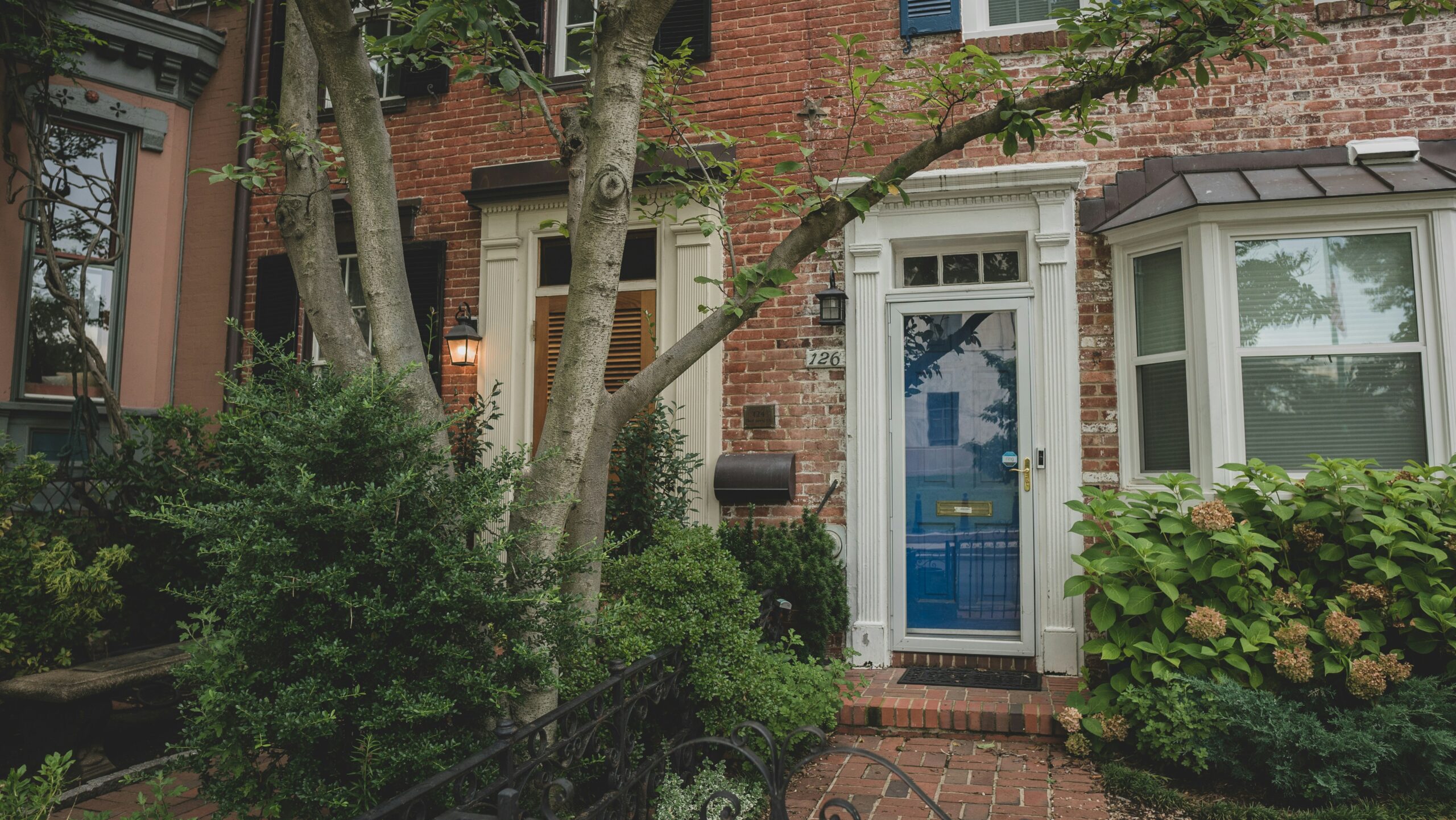
On October 28, 2025, Wilkes Initiative Director Emilia Calma testified before the DC Council Committee on Housing on the Rent Stabilization Protection Amendment Act of 2025. Her testimony focused on making the housing voucher program more efficient to promote affordability. Read the complete testimony below or download a PDF copy.
Good morning Chairman White and members of the Committee. My name is Emilia Calma and I am the Director of the Wilkes Initiative for Housing Policy at the D.C. Policy Center, an independent think tank focused on advancing policies for a strong, competitive and vibrant economy in the District of Columbia. Thank you for the opportunity to testify on Bill 26-0070, the Rent Stabilization Protection Amendment Act of 2025.
Bill 25-0070 requires the D.C. Housing Authority (DCHA) to follow rent stabilization rules when calculating rent subsidies for housing providers.[1] While this change would create predictability in rent growth for units that are receiving HCV, it may exacerbate problems that slow down and weaken the HCV program. It also might lead to fewer market-rate units qualifying for the HCV program, limiting tenant options. What is most urgently needed is a plan to improve DCHA processes so units can be approved as rent-reasonable with speed, accuracy, and dependability.
The D.C. Council cannot directly influence DCHA actions, but it has the authority to conduct effective oversight to ensure DCHA’s rent reasonableness program runs with speed and accuracy.
Potential harmful consequences of rent control on voucher units.
The Housing Choice Voucher (HCV) program already prevents excessive rents through federally mandated rent reasonableness determinations. Under HUD regulations, housing authorities must verify that rents are reasonable compared to similar subsidized units before executing any Housing Assistance Payment (HAP) contract, before any rent increase, and when Fair Market Rents decline by 10 percent or more.[2] This system exists specifically to ensure taxpayer dollars are not overpaying for rental units and that voucher holders are not charged inflated rents simply because they receive assistance.
Between 2019 and 2023, voucher rents were frozen, even as operating costs rose with inflation and other expenses. Despite these rising costs, DCHA has received very few requests from landlords for rent increases now that they are allowed—not because costs have remained stable, but because the rent reasonableness process often results in rent reductions when such requests are made. Many housing providers fear that seeking an increase could actually lead to a loss of income.
At first glance, making the voucher program subject to rent control provisions might appear to be an improvement, since it would allow standardized annual rent adjustments—such as the same formula used under rent control (CPI + 2 percent). This predictability could help property owners better plan for maintenance costs and preserve affordability over time.
However, such a provision would be unnecessary if DCHA’s rent reasonableness program operated more efficiently, transparently, and on a predictable schedule. Moreover, applying rent control to voucher units could produce several unintended consequences:
- Higher costs for housing providers: Housing providers in the HCV program already navigate extensive compliance requirements including additional management time, paperwork requirements, inspections, additional vacancy time due to leasing delays, and delays in payment. Adding rent control restrictions without increasing DHCA capacity will only add to these delays and costs.
- Increased administrative burden: DCHA already struggles to meet its existing obligations due to limited capacity. Imposing another regulatory layer would compound administrative complexity without addressing the root compliance problems.
- Regulatory conflict: Rent control caps could clash with rent reasonableness determinations, raising the question of which rule governs. This ambiguity could lead to disputes, confusion, and additional bureaucracy.
- Participation incentives. Housing providers must be able to pay their operating costs in order to stay in business. If the rent required to maintain a unit is above the restricted level allowed by rent reasonableness and rent control, units will not be approved for voucher use, effectively taking units of the system. A well-run system can encourage continued participation, while a rent control overlay risks driving providers out and segregating voucher holders to lower income areas.
Issues with the voucher process should be addressed to improve access and use.
DCHA has long faced several challenges in efficiently moving tenants off the waitlist, conducting faster unit inspections, and reducing the time between tenant-approval and move in. Currently, leasing a unit to a voucher holder can take 45-60 days and moving tenants into units can take over 60 days.[3] Further, landlord payments can be delayed by two to nine months. The rent reasonableness checks introduced in 2023 added additional weeks of delay, more if rent reasonableness decisions are appealed.
Making HCV subject to rent-control provisions will not address these problems. To improve outcomes for tenants, DCHA must:
- Improve the HCV lease-up and inspection process by addressing bottlenecks that delay the unit leasing and occupancy. The goal should be to improve the existing system to get tenants into units, and not make it more complicated by adding more requirements.
- Publish “reasonable rent” ranges by unit size and neighborhood.
Currently, there is little clarity around what qualifies as a “reasonable rent.” DCHA publishes citywide payment standards but relies on AffordableHousing.com to determine reasonable rents for individual Requests for Tenancy Approval. As a result, tenants often apply for units without knowing whether the proposed rent will be approved, leading to wasted time, lost application fees, and extended exposure to unsafe or unstable housing conditions.
To improve transparency and efficiency, DCHA should publish reasonable rent ranges by bedroom size and neighborhood. This would allow tenants and housing providers to make informed choices and streamline the leasing process. [4] The data should be updated at least annually, and more frequently when possible.
- Increase transparency in rent reasonableness decisions:
Currently, housing providers have limited visibility into how DCHA evaluates or rejects proposed rent levels. DCHA could improve transparency by publishing data on the number of applications received, the comparable rents and criteria used to determine reasonableness, and the number of denials by neighborhood. It should also make public the process it follows to assess rent levels.
This information would allow housing providers to better align their proposals with DCHA’s standards before submitting a Request for Tenancy Approval, increasing the likelihood of approval. Greater transparency would enhance predictability, build trust, and make the leasing process more efficient.
- Strengthen DCHA capacity.
Provide resources and technical assistance to ensure DCHA has adequate staffing and systems to conduct quick rent reasonableness reviews and manage the appeals process. While the Council cannot direct DCHA to make these investments, it could work with the DCHA board to make these a priority.
In sum, to achieve both housing affordability and the success of the HCV program, Council should focus on making the voucher process more efficient. This approach will better serve voucher holders, protect taxpayer resources, and maintain the viability of the Housing Choice Voucher program in the District.
Thank you for your consideration, and I welcome any questions.
[1] This means when a new lease is signed for a unit that is receiving Housing Choice Vouchers (HCV), the combined tenant and subsidy rent does not exceed rents allowed by rent stabilization, with allowable adjustments.
[2] The review notes that “submarket payment standards should not be treated as a proxy for rent reasonableness reviews” and questions what DCHA’s actual process is to verify reasonable rents.
https://oag.dc.gov/sites/default/files/2022-10/DCReview_Final%209302022%20(1).pdf
Recent HUD monitoring reveals that DCHA had failed to properly implement its rent reasonableness obligations and had not conducted rent reasonableness assessments in compliance with federal standards. In response, DCHA overhauled their process over the summer, implementing new rent reasonableness and utility standards to comply with HUD and implementing new software.
[3] Information on timing is from interviews with housing providers. Interviews were conducted by the D.C. Policy Center in October 2025.
[4] https://equalrightscenter.org/wp-content/uploads/erc-testimony-re-dcha-fy2024-performance.pdf